How to Start a Faceless Channel on TikTok, YouTube Shorts or Reels
You do not need to be on camera to build a channel. Here is how to pick a niche and a repeatable format, handle voice and visuals, use AI tools without breaking platform rules, and keep posting.
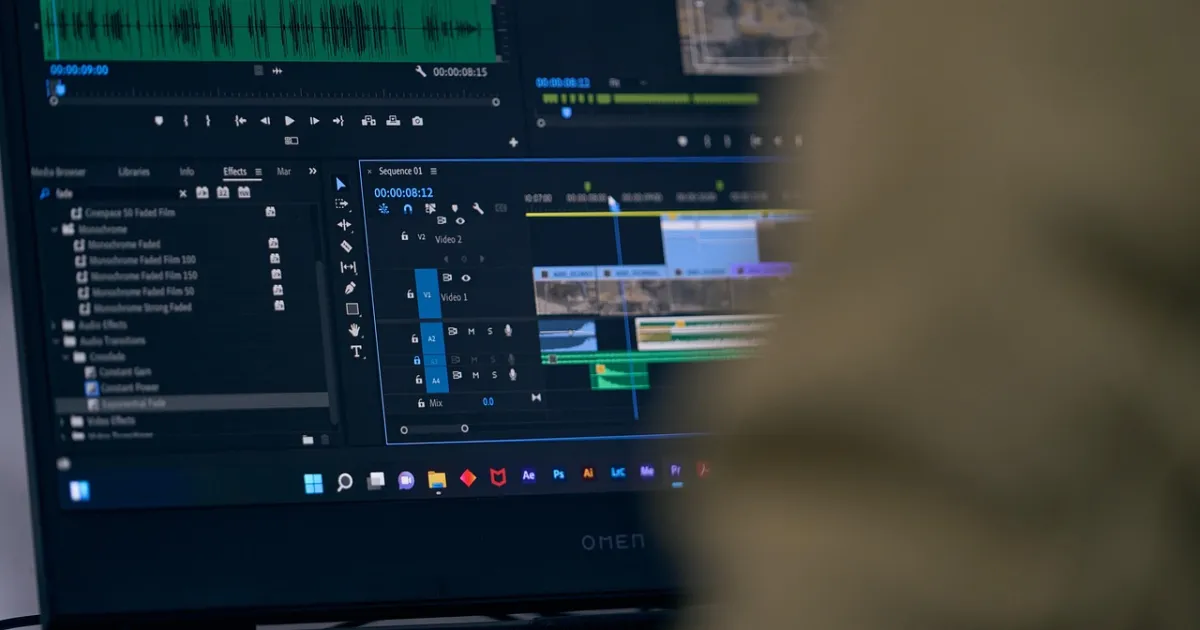
A faceless channel is one where the creator never appears on camera. The videos are carried by a voice, text, footage, animation or hands doing something. Plenty of successful channels work this way, and for many people it is the most comfortable way to start. It is not a shortcut, though: without a face, the format, the writing and the consistency have to do more work.
1. Pick a niche you can sustain
The best niche is one where you can think of a hundred video ideas without straining. Ask yourself:
- Do I know or enjoy this topic enough to research it every week?
- Is there a steady supply of material: questions, stories, facts, how-tos?
- Can the topic be shown visually without me on screen?
Common faceless niches include history and "did you know" facts, explainers about science or money, book and film summaries, cooking and crafts filmed from above, gaming, productivity tips, and storytelling. A narrower angle ("history of everyday objects" rather than "history") makes a channel easier to recognize.
2. Design a repeatable format
A format is the recipe every video follows. It makes production faster and lets viewers know what to expect.
| Format element | Example |
|---|---|
| Opening | A question on screen over a striking image |
| Structure | Question → three quick facts → the surprising answer |
| Length | Around 30–45 seconds |
| Look | Same font, caption style and color for every video |
| Voice | The same narrator and pace each time |
| Ending | A line that loops back to the opening |
3. Write scripts that move
Short-form scripts are short: often 80–150 spoken words. Keep one idea per video, write the way people talk, and cut every sentence that does not move the story forward. The opening line matters most; see our guide to writing hooks for patterns you can use.
4. Voice: yours or synthetic
Your own voice builds a recognizable channel and avoids sounding like everyone else. A decent USB or lavalier microphone in a quiet, soft-furnished room makes a bigger difference than any software. Synthetic voices are an option and have improved a lot, but popular stock voices are heard on thousands of channels, which makes it harder to stand out. If you use one, choose it deliberately and keep it consistent.
5. Visuals you have the right to use
- Your own footage: hands, objects, screens, places. The safest and most original option.
- Licensed stock footage and music from libraries whose license covers social media use.
- Animation, text and graphics you make yourself.
- AI-generated images or video, used within the tool's terms and the platform's rules.
Avoid re-uploading clips from films, TV, other creators or sports broadcasts. Beyond copyright problems, platforms treat repackaged content differently from original work, especially when it comes to monetization.
6. Know the platform rules on AI and reused content
Each platform has its own policies, and they change. Two areas matter most for faceless channels:
- AI disclosure: YouTube and TikTok ask creators to label realistic content that was made or significantly altered with AI. Check each platform's current help pages for what needs a label and how to add it.
- Reused and repetitive content: programs that pay creators generally expect original work and may not reward channels that mainly repost others' material or mass-produce near-identical videos with little added value.
Read the current rules on each platform's help center before you plan a channel around a particular kind of content.
7. Batch, schedule, review
Consistency beats bursts. Many faceless creators write several scripts in one session, record voice-overs together and edit in batches, then schedule posts with the platforms' own tools. Once a week, look at your analytics: which videos held viewers longest, where people dropped off, which topics brought followers. Make more of what works and change one thing at a time on what does not.
FAQ
What is a faceless channel?
A channel where the creator never appears on camera. Videos rely on voice-over, text, footage, animation or filmed hands and objects.
Can you use AI voices on a faceless channel?
You can, within each tool's terms and each platform's rules. Many creators find their own voice helps the channel stand out, since popular synthetic voices are widely used.
Do I have to label AI-generated videos?
YouTube and TikTok ask creators to label realistic content made or significantly altered with AI. Check each platform's current help pages for the exact rules.
How long should faceless short-form videos be?
Many work best between 20 and 60 seconds with one clear idea, but the right length depends on the format and what keeps your viewers watching.
 Scripts